
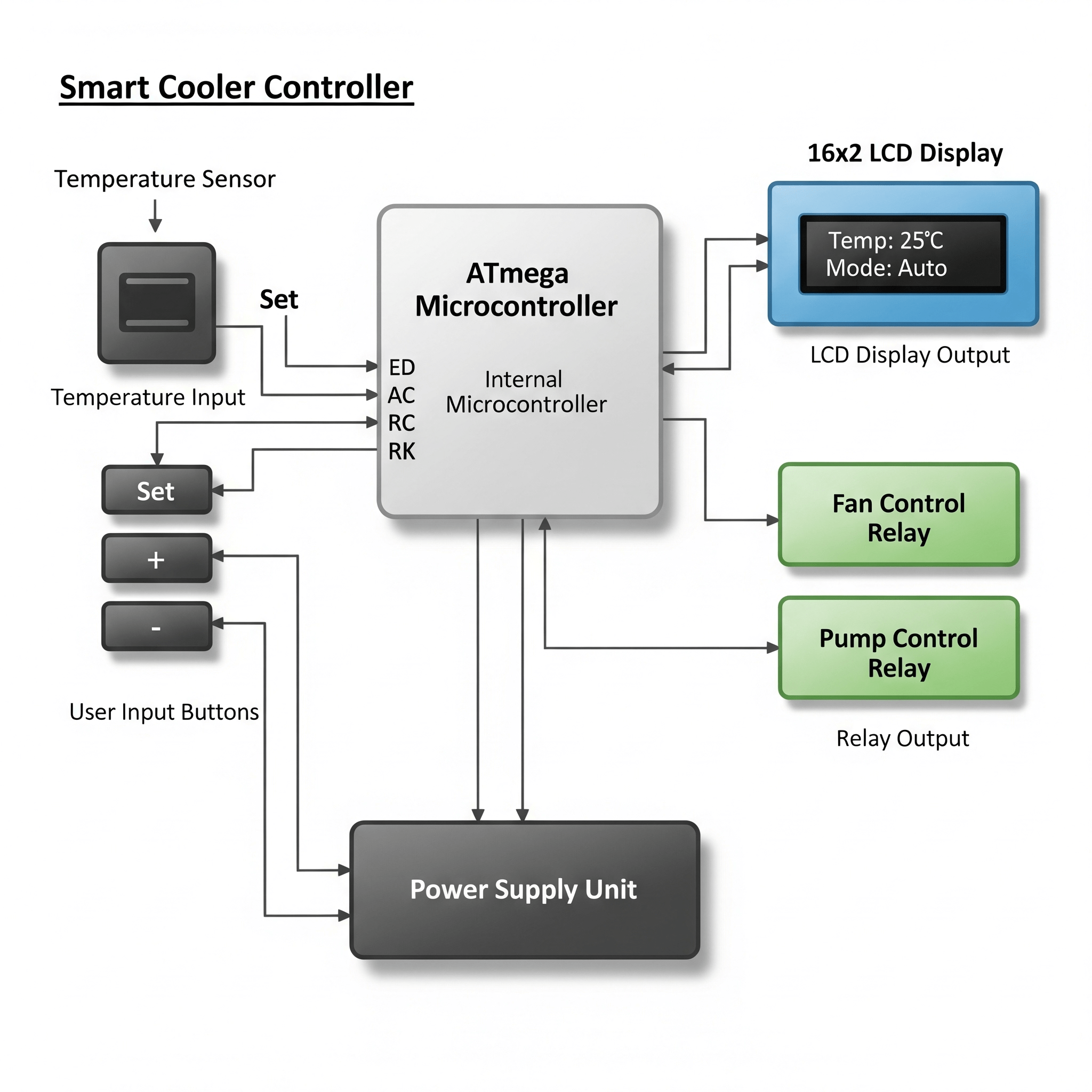
Smart Cooler Controller Architecture
This interactive diagram demonstrates the high-level architecture of the Smart Cooler Controller. Hover over any component to view its function, and click **Run Simulation** to see the logical flow of data and power through the system. Please note that this is a simplified representation for conceptual purposes.
Temp Sensor
User Input
Microcontroller
ATmega32
LCD Display
Fan Relay
Pump Relay
Power Supply
Hover over a component to see its details.
Case Study: Smart Cooler Controller System
Client: Personal Innovation Project
Project Duration: 2013 – Present (Tested in Real-World Environments)
Role: Lead Innovator, Developer, and System Integrator
The Challenge
Evaporative air coolers are widely used in arid climates but are inefficient in energy and water usage, with no adaptive temperature control. Most rely on basic mechanical thermostats or manual timers, wasting resources and delivering inconsistent comfort.
The goal was clear: create a cost-effective retrofit solution that could transform existing hardware into a smart, energy-aware cooling system—without requiring full replacement.
The Solution
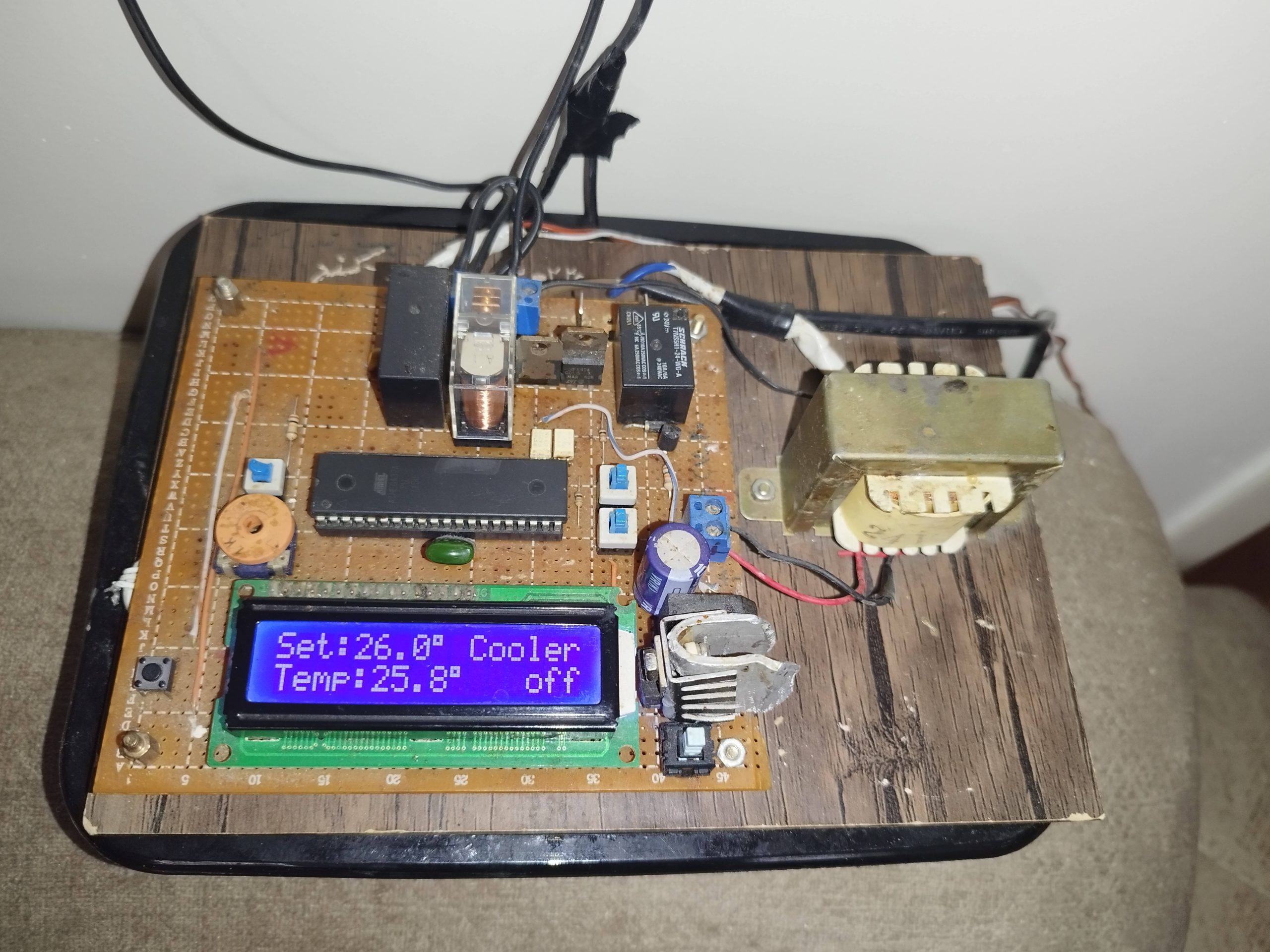
I designed and built a smart controller board powered by an ATmega32 microcontroller and NTC 10K temperature sensor.
The system brings traditional air coolers into the smart era by adding:
Temperature-Based Automatic Control — dynamically adjusts operation to the setpoint.
Manual & Auto Modes — with adjustable time settings.
Energy Optimization — using PWM and smart control logic to minimize waste.
LCD Interface — for clear, real-time status updates.
Low-Cost & Reliable — designed for long-term use in high-temperature conditions.
My Contributions
System Architecture: Designed complete embedded logic using C++ and AVR-GCC.
Firmware Development: Created efficient code for sensor readings, timing, LCD output, and PWM control.
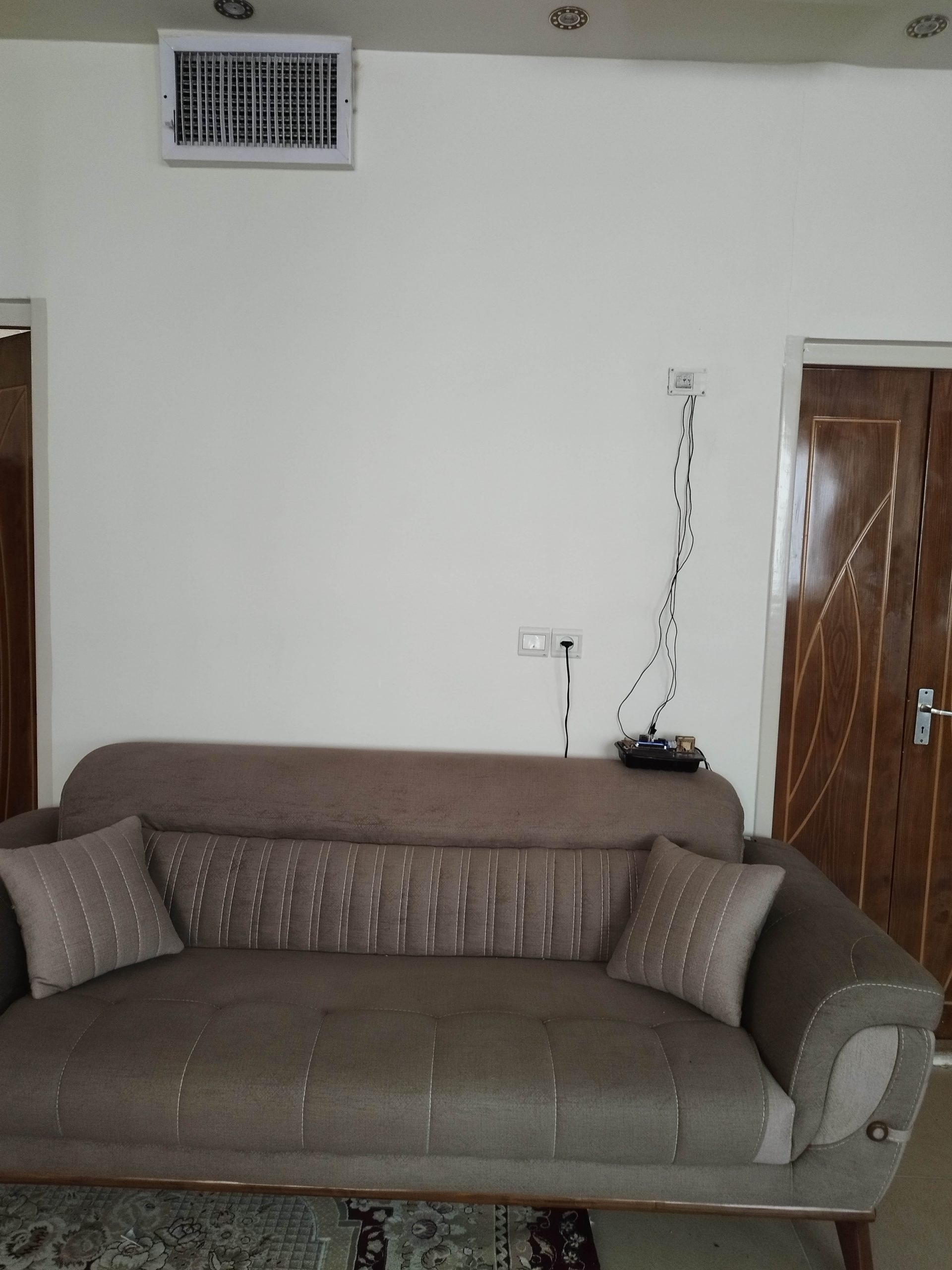
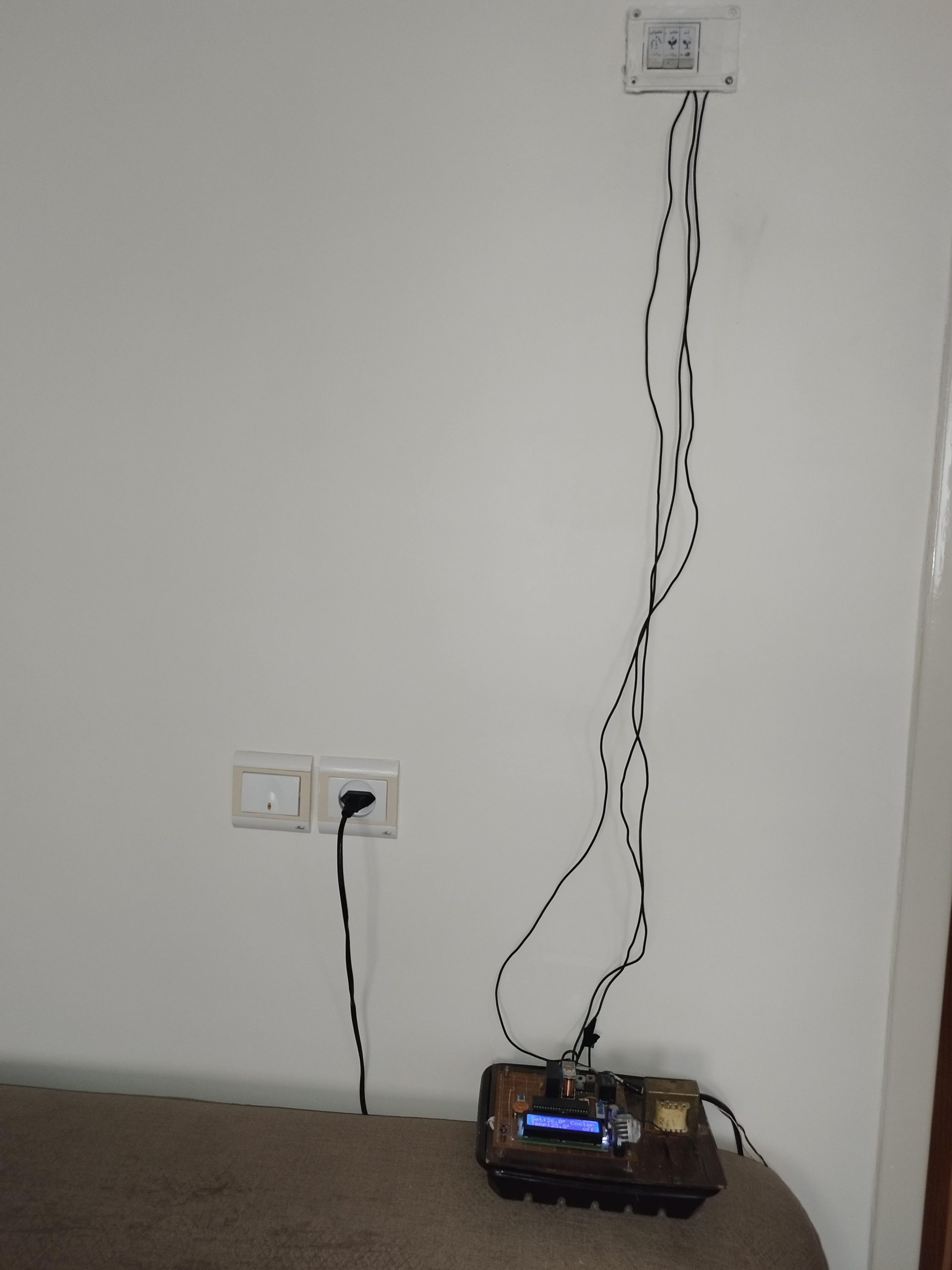
Hardware Design: Built the control board to be installed without altering the original motor.
Field Testing: Deployed in a real-world residential environment for 4 consecutive summers, with software updates improving functionality over time.
The Impact
~25% Estimated Energy Savings by reducing unnecessary motor runtime.
Consistent Room Temperature with reduced fluctuations of ±1.5°C.
Extended Hardware Lifespan through optimized control cycles.
Positive User Feedback leading to requests for further units.
This project demonstrated that even with simple electronics and smart logic, impactful solutions can be created for local environments — solutions that bridge the gap between traditional hardware and modern smart control systems.
Key Technologies Used
Microcontroller: ATmega32
Language: C++
Temperature Sensor: NTC 10K Thermistor
Interface: LCD 16×2
Control Method: PWM-based fan/motor regulation
Status & Future Potential
The prototype is fully functional and deployed in a real-world setting.
Future versions can expand its potential by adding:
Wi-Fi or Bluetooth connectivity.
App-based monitoring & control.
Capability to become the central smart-home controller board, integrating multiple appliances.
All content and case studies are © Mehrdad Meshkat. Reuse or replication without written permission is prohibited.